Rope
Hemp cordage was the rigging of empires. A 74-gun Royal Navy ship-of-the-line carried roughly 50 tonnes of it. Saltwater-resistant, swelling slightly when wet so the knots lock — hemp held the sails up between 1450 and the steel-rigging age of the 1880s.
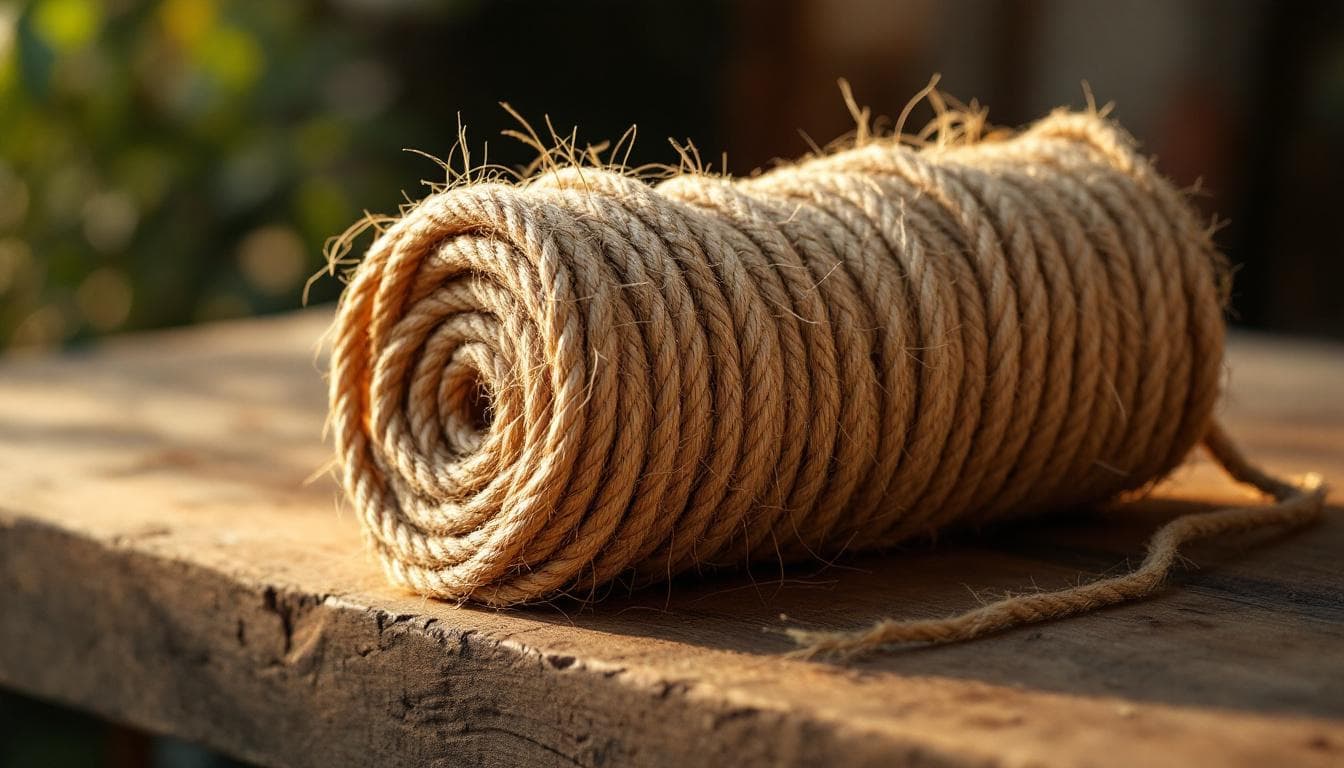
Three-strand laid
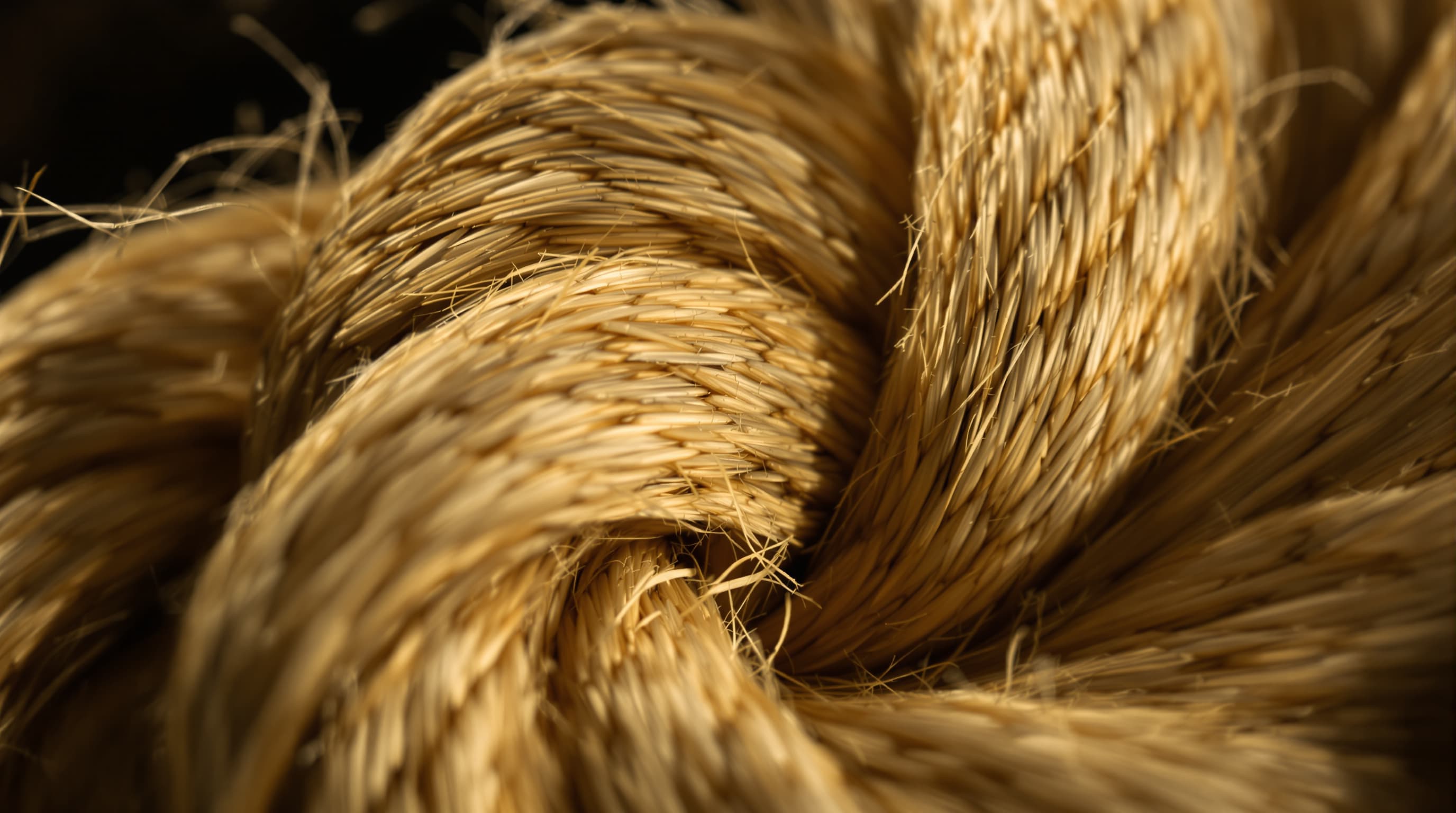
Hand-laid rope is built in two opposing twists. Yarns are spun S-twist (clockwise), three yarns are then twisted Z-twist (counterclockwise) into a strand, three strands are twisted S-twist again into the finished rope. The opposing twists hold the rope tense against itself — the reason a hemp hawser is round, not flat.
S-twist yarns · Z-twist strands
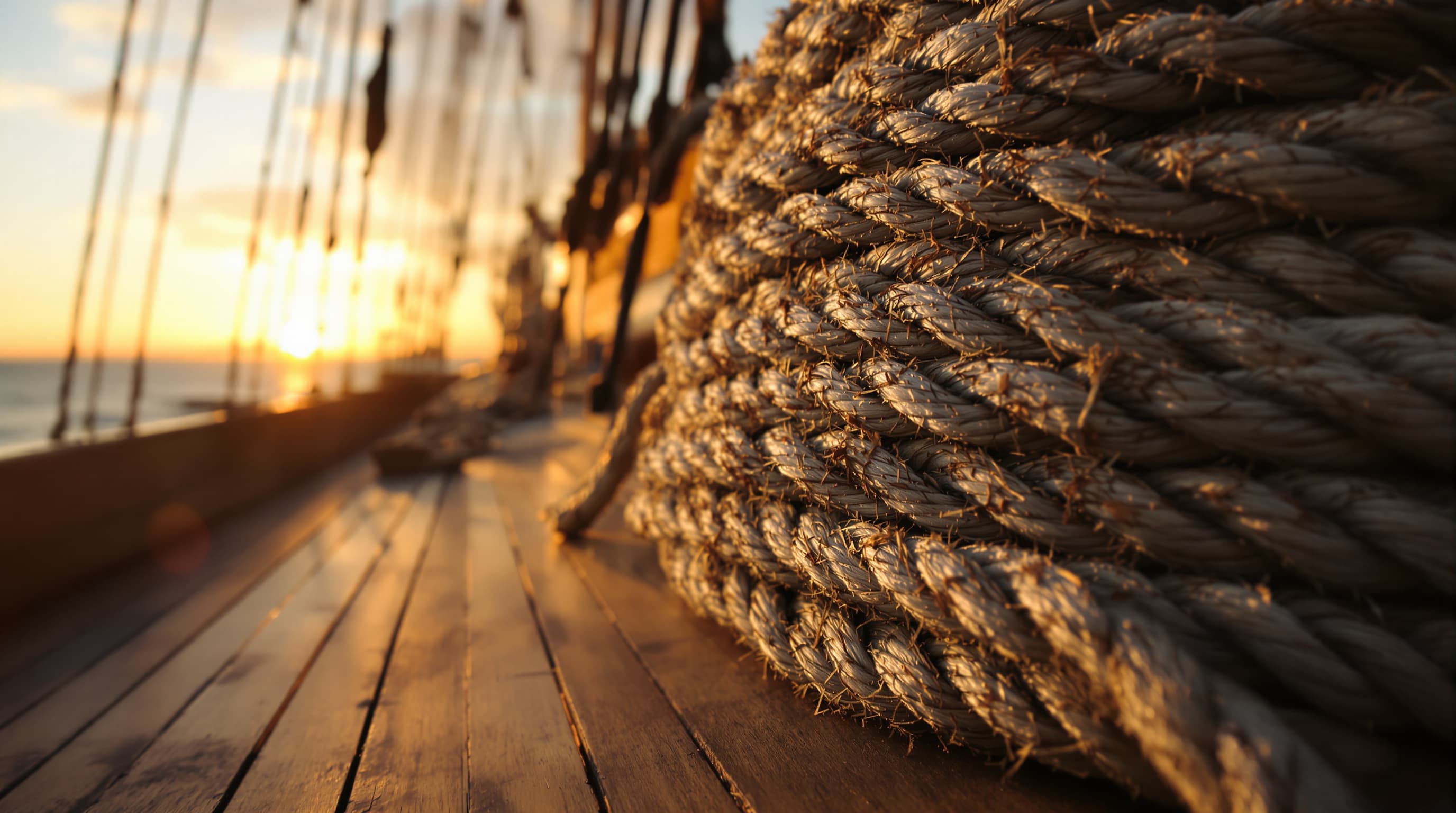
On the deck
Hemp rope was traditionally tarred with Stockholm tar against rot. It outlasted the wooden ships it served on — Mayflower II was rigged with Italian hemp in 1957 and the cordage held for decades. Manila replaced it in the late 1800s; nylon mostly replaced both in the 1950s. But for traditional shipbuilding the craft is still alive.
Salt, oil, age
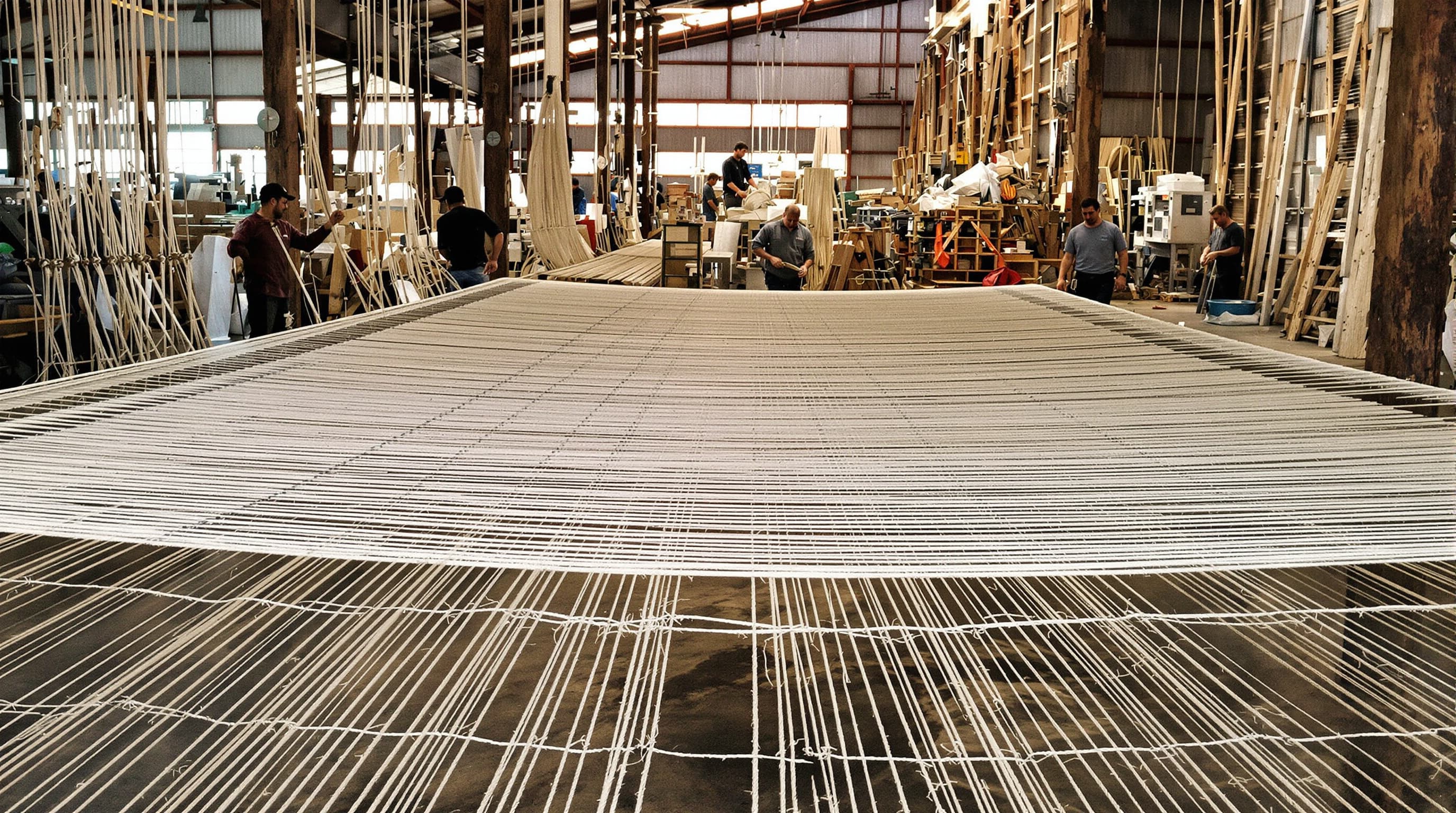
Rope walks
A few rope-walks still hand-lay hemp cordage: Chatham Historic Dockyard in Kent, the New England Ropes heritage shop, Cordeleria San Felipe in Spain. The technique is unchanged from the 18th century — long covered sheds where the rope is twisted between two posts. The craft survived the industries it served.
Mast Hope · Chatham · Cordeleria San Felipe
How can we hemp you?
Building. Sourcing. Specifying. Investing. Or just curious about where the European hemp supply chain is going in 2026. Tell us who you are and what you're working on. We read everything; we reply to most within two working days.
We do not sell, share, or rent your data. Your message lands in our team inbox and stays there.