Oil
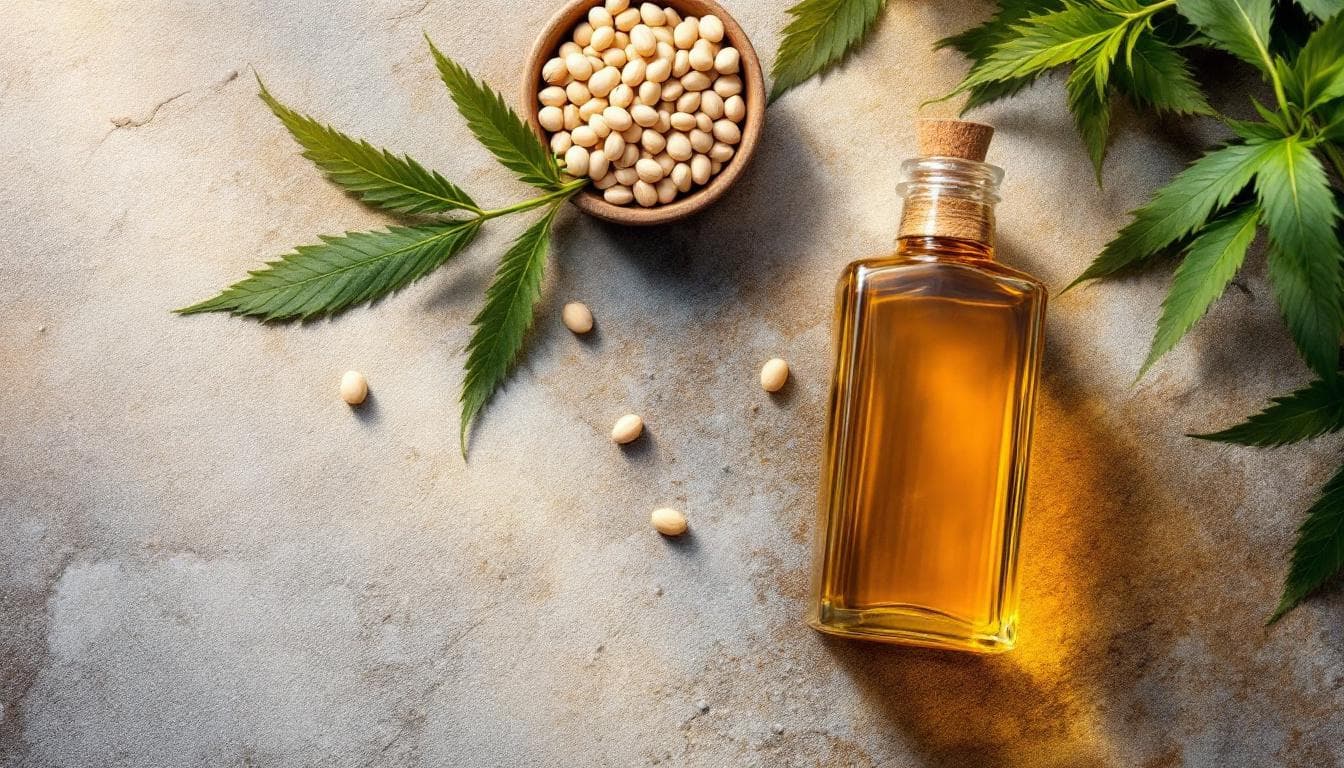
Hemp seed oil is the rare plant oil that lands inside the WHO recommended dietary band by default: about 55% linoleic acid (omega-6), 20% α-linolenic acid (omega-3), with another 3–6% gamma-linolenic acid (the same anti-inflammatory fatty acid that drives evening primrose). The seed itself is a complete protein. The oil is a finishing oil.
Cold-press
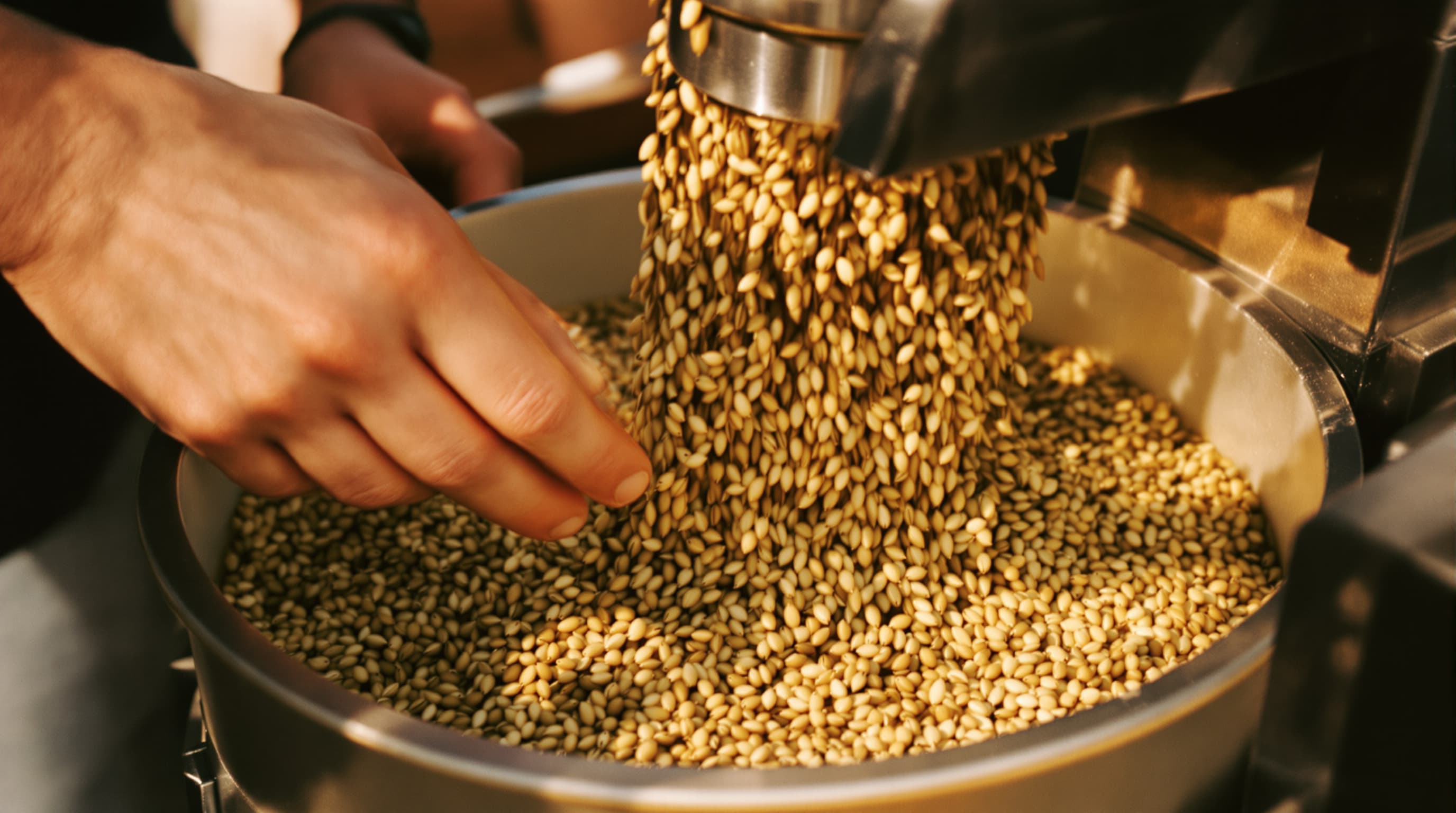
Hemp seeds are fed into a screw expeller (auger press). The mechanical pressure crushes the seed and exudes the oil through a slotted barrel; the temperature must stay below 60 °C — over that, the polyunsaturated fatty acids start to degrade. Cold-press yields are about 28–32% of the seed's mass.
Below 60 °C · screw expeller
Into amber glass
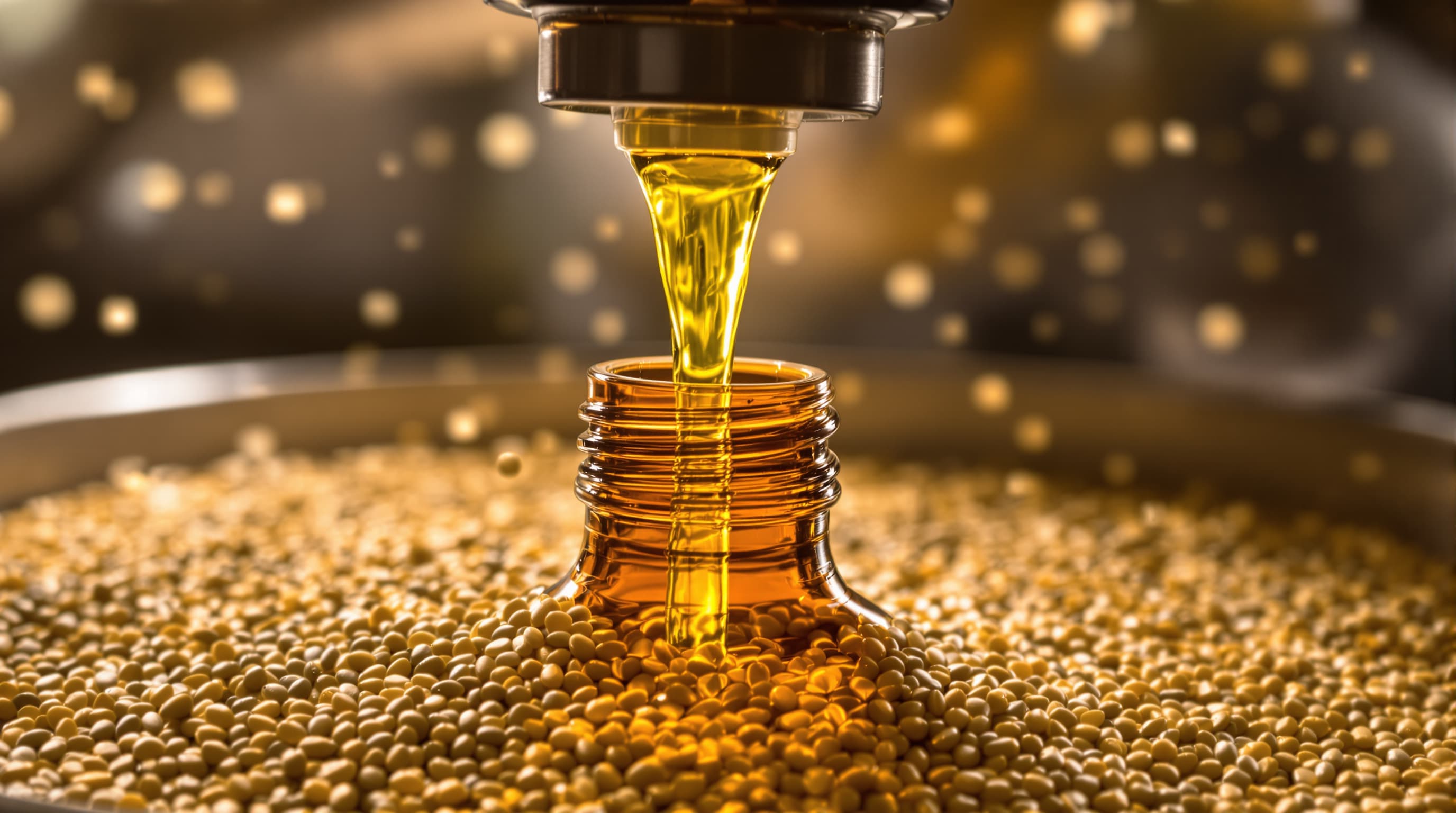
Polyunsaturated oil oxidises in UV. Hemp seed oil is bottled in amber or dark green glass, sealed under nitrogen if the producer is fancy. Refrigerated, it keeps for about 14 months from press. At room temperature, two to four months. Smoke point is 165 °C — too low for frying; just right for dressings and finishing.
Light is the enemy
Who presses it
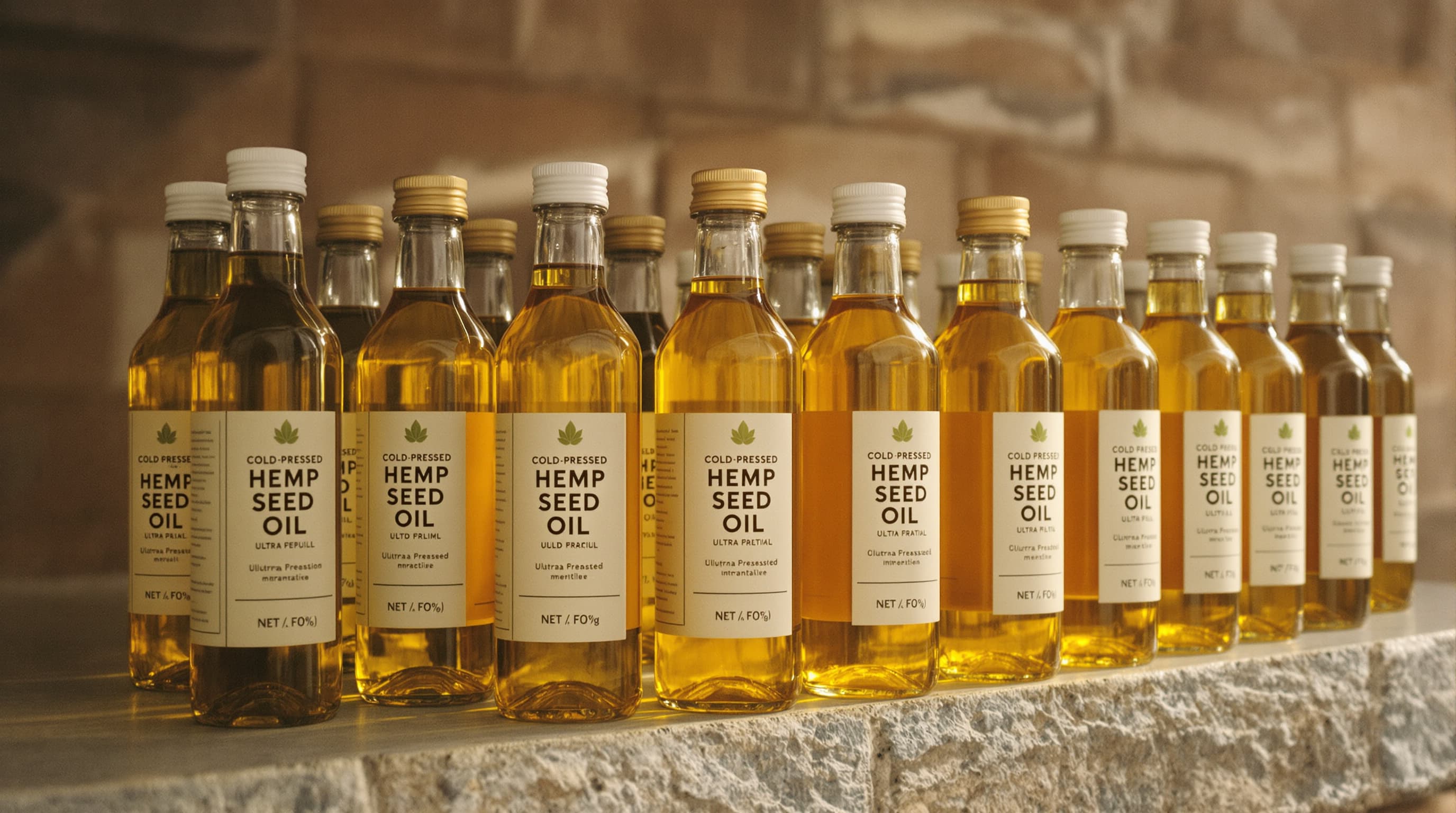
Manitoba Harvest (Canada, now Tilray) is the largest. Good Hemp in Devon presses British-grown seed for the UK supermarkets. Nutiva does the Whole Foods channel in the US. Hanf-Zeit handles the German specialty market. Smaller European pressers — Cânhamor in Portugal, La Chanvrière in France — are the next wave.
Manitoba Harvest · Good Hemp · Nutiva · Hanf-Zeit
How can we hemp you?
Building. Sourcing. Specifying. Investing. Or just curious about where the European hemp supply chain is going in 2026. Tell us who you are and what you're working on. We read everything; we reply to most within two working days.
We do not sell, share, or rent your data. Your message lands in our team inbox and stays there.