Cannabis sativa L.
Carl Linnaeus formally described the plant in Species Plantarum, 1753. Lamarck added Cannabis indica in 1785; Janischewsky added Cannabis ruderalis in 1924 from wild Russian populations that flower by age rather than daylength. Modern molecular taxonomy treats the genus as a single polymorphic species — sativa, indica and ruderalis as freely interbreeding subspecies.
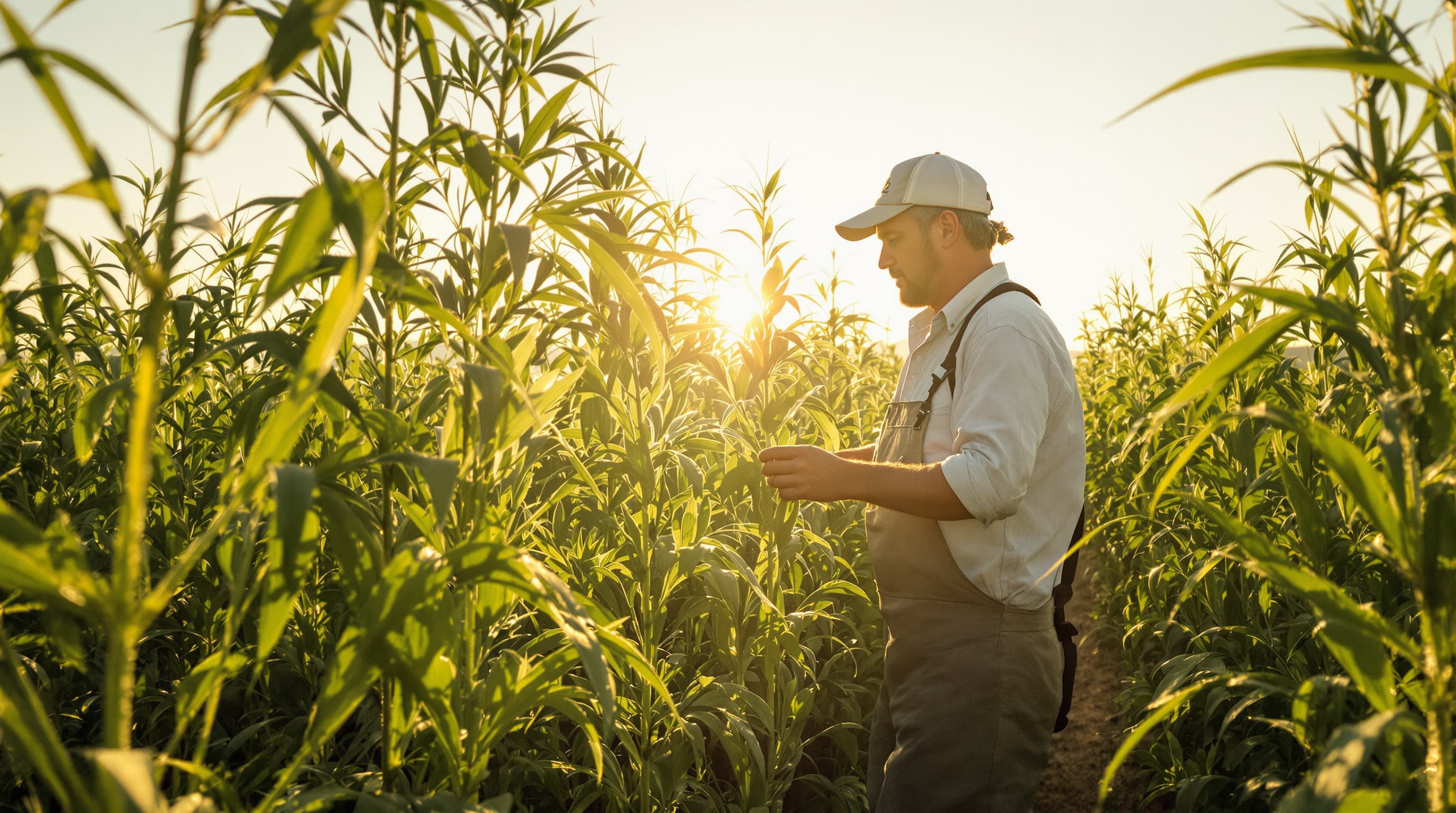
Cannabaceae
The family Cannabaceae contains two principal genera — Cannabis and Humulus, the hop. Genetic divergence between the two occurred roughly 27.8 million years ago. Hops took to climbing; hemp committed to standing up. Beyond these two and the small hackberry genus, the family is remarkably compact for one that has so disproportionately shaped human history.
A cousin of hops
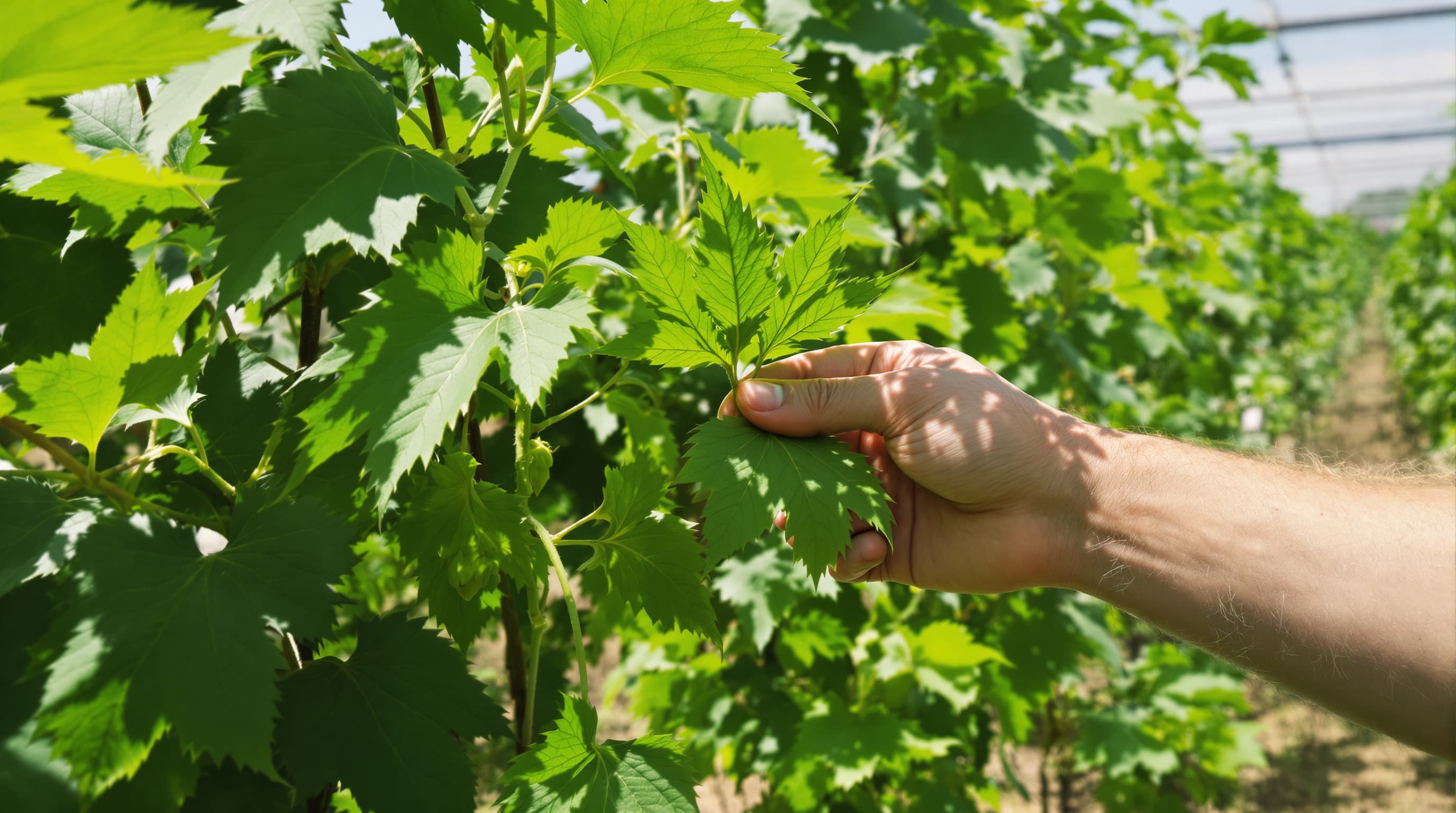
Tibetan plateau
Pollen and palaeoecological evidence place the centre of Cannabis diversity on the north-eastern Tibetan plateau, near Qinghai Lake, in the late Oligocene. From there the genus spread eastward into Asia and westward into Europe and the Middle East — and accompanied human migration almost everywhere thereafter.
McPartland, Hegman & Long · 2019
Photoperiod
Cannabis sativa initiates flowering when uninterrupted darkness exceeds roughly twelve hours per night. In temperate Europe this triggers in mid-July; in subtropical climates earlier. The plant essentially measures its own latitude with the cycle of the sun. Autoflowering ruderalis-derived cultivars set this aside and flower at a fixed age, instead.
Short-day · > 12 h of darkness to flower
Cannabinoids
The plant produces over a hundred cannabinoids, of which THC and CBD dominate. THC binds tightly to the CB1 receptor that mammals have in their central nervous system. The mammalian endocannabinoid system predates Cannabis by hundreds of millions of years. The plant evolved its own cannabinoids independently as a UV-protectant resin for the seed head; the receptor fit is, on a geological timescale, a coincidence.
CB1 receptors · an accidental fit
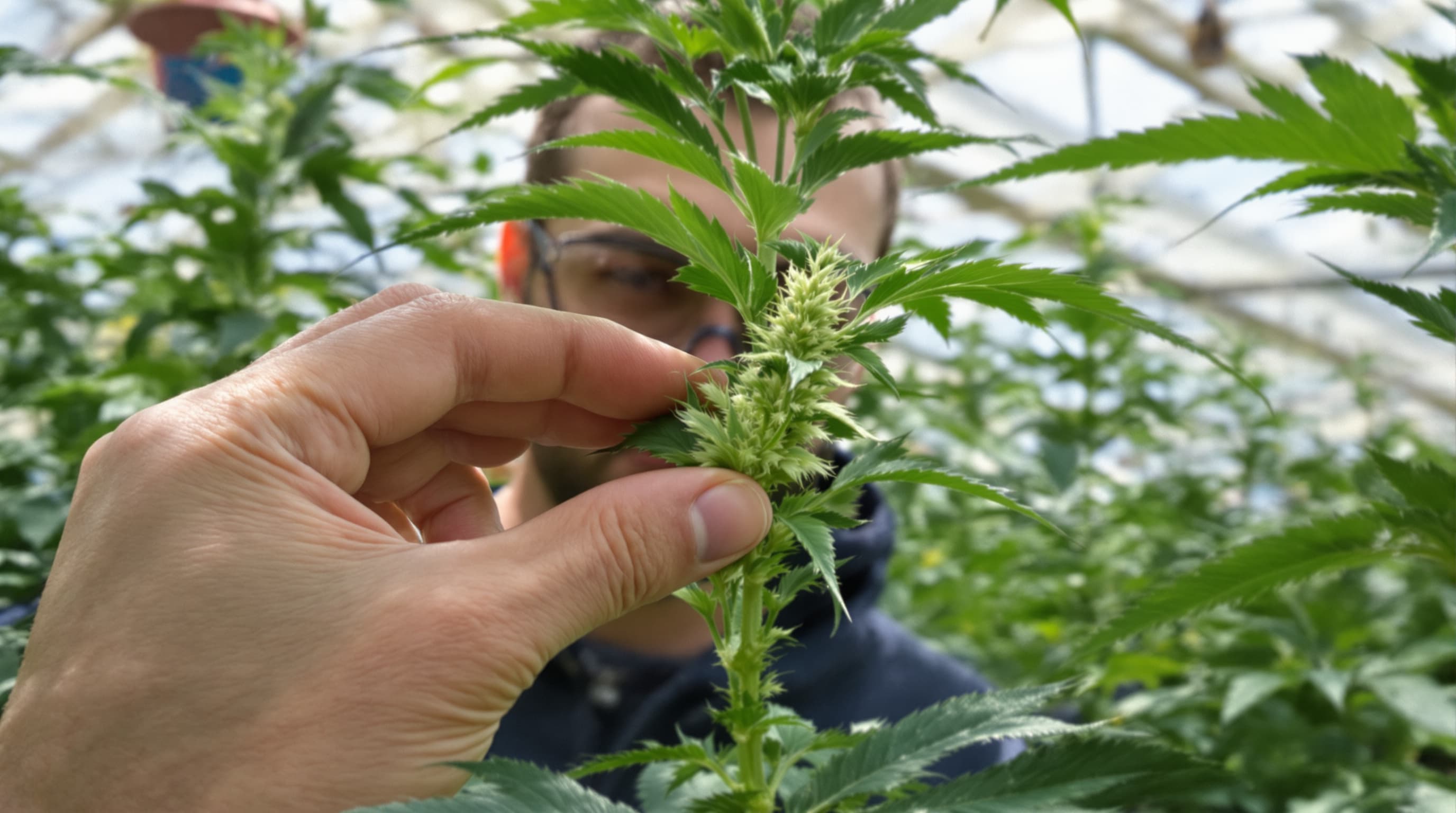
Terpenes
The other half of the resin chemistry is terpenes — the volatile aromatic molecules also responsible for the smell of pine, citrus peel, mango and lavender. A walk through a late-summer hemp field gives the nose almost all of them at low concentration. The plant uses them to deter herbivores and pathogens; we have read them as a pharmacology.
Myrcene · pinene · limonene · linalool · caryophyllene
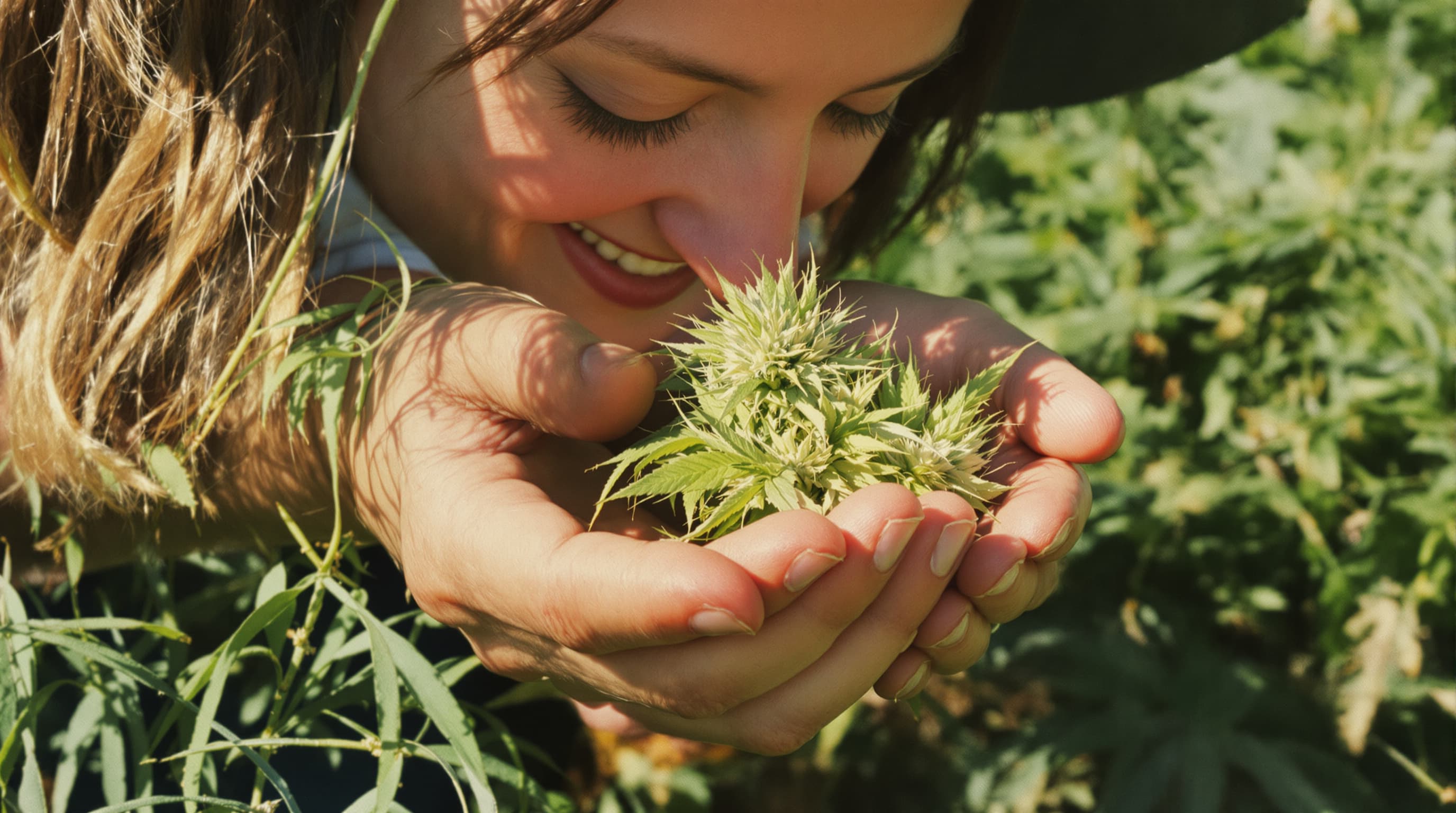
The 0.3% line
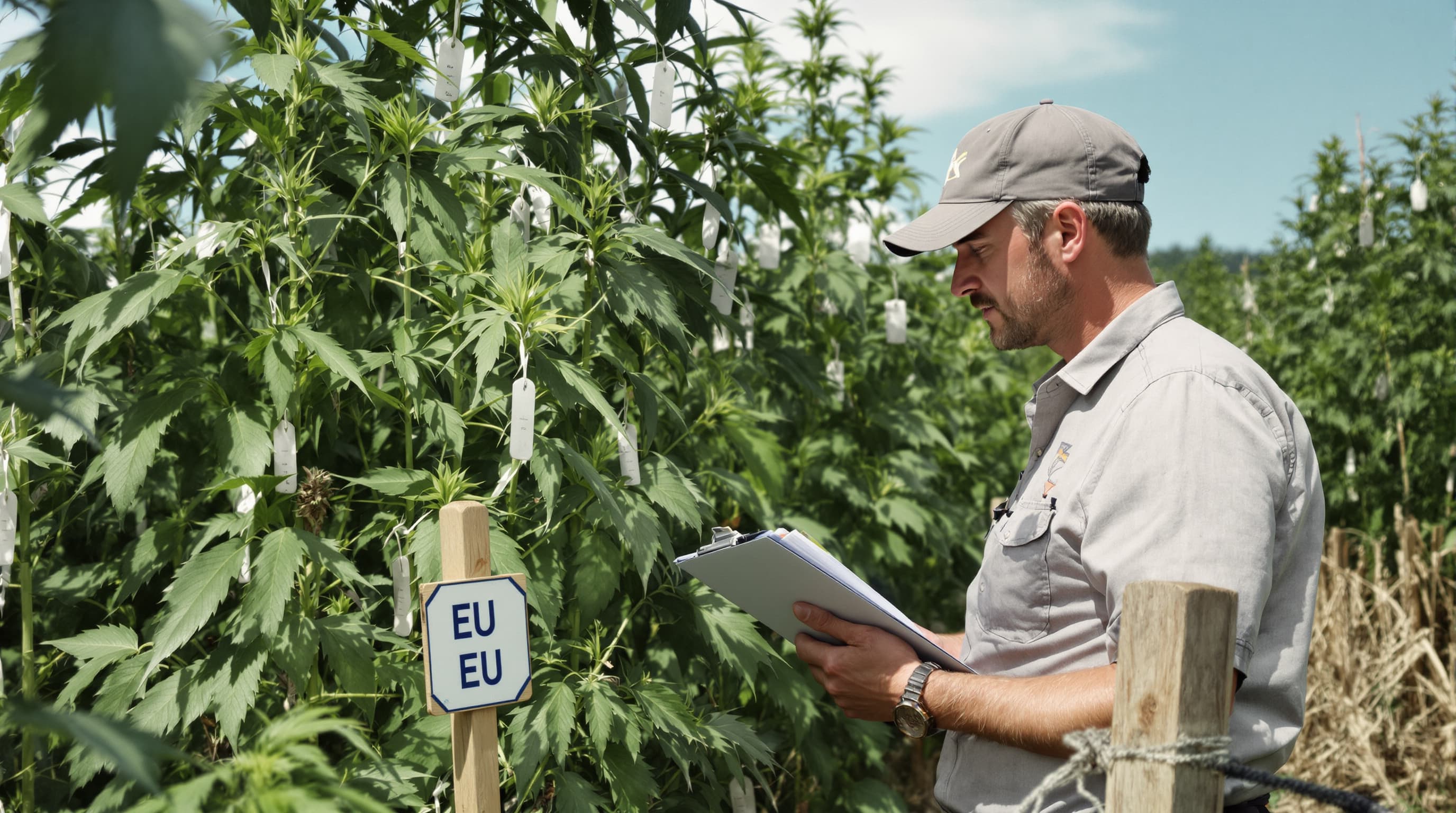
Cannabis sativa cultivars vary in THC content from essentially zero to 25% or more by dry weight. The legal divide between 'industrial hemp' and 'cannabis as a drug' is set, in the US since 2018 and in the EU since 1 January 2023, at 0.3% Δ9-THC by dry weight in the flowering tops. The number is not biological — it is policy. But it is the policy every certified European cultivar is bred against.
EU since 1 January 2023 · US since 2018
How can we hemp you?
Building. Sourcing. Specifying. Investing. Or just curious about where the European hemp supply chain is going in 2026. Tell us who you are and what you're working on. We read everything; we reply to most within two working days.
We do not sell, share, or rent your data. Your message lands in our team inbox and stays there.