The first knot
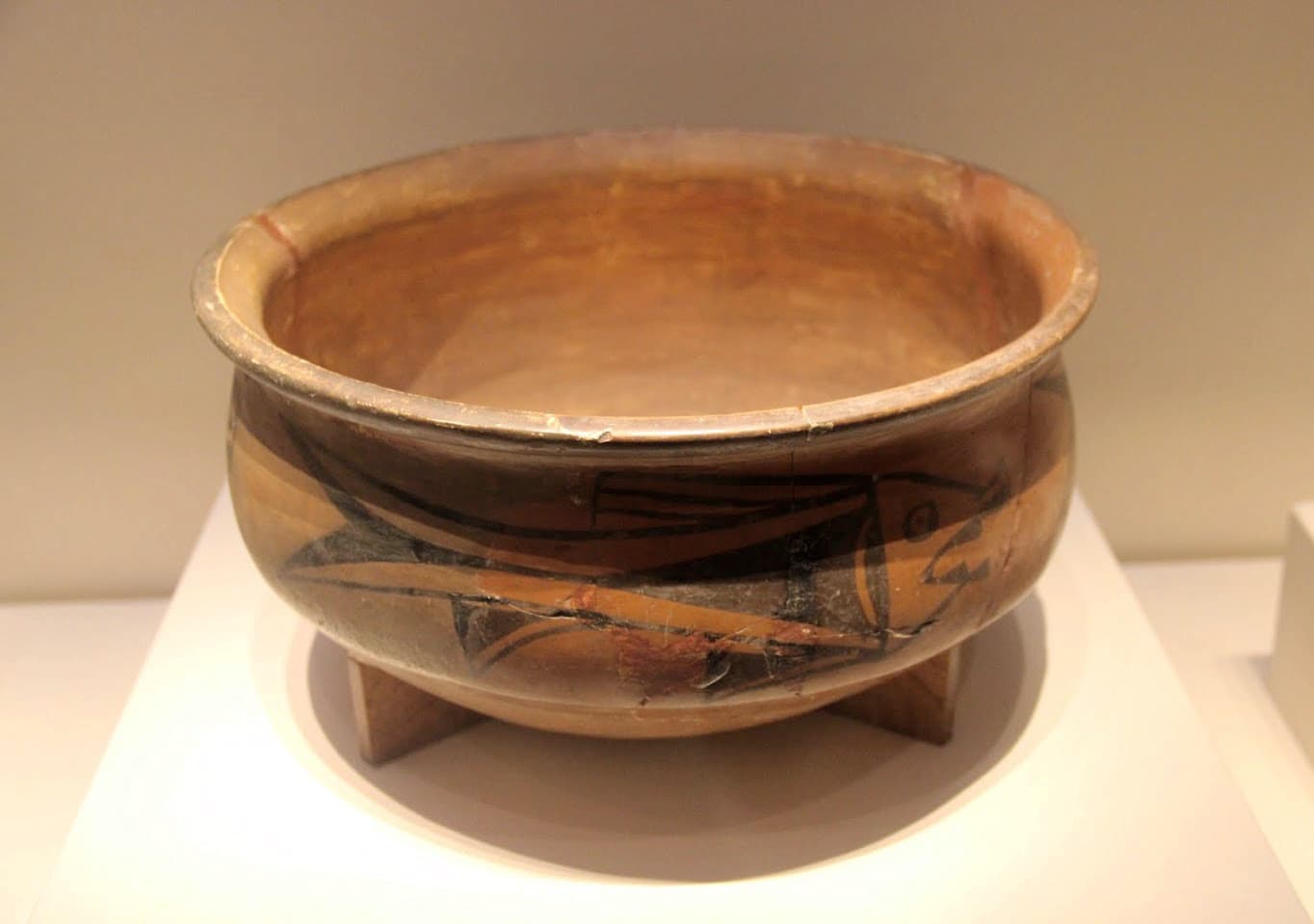
At Yuan-shan in Taiwan, Neolithic potters pressed twisted hemp cord into wet clay before firing. Across the strait in the Yellow River valley, the same cord-marking surfaces on Yangshao ceramics. Before pottery decoration, before weaving, hemp was a knot — a way of holding things together.
Shennong tastes the plant
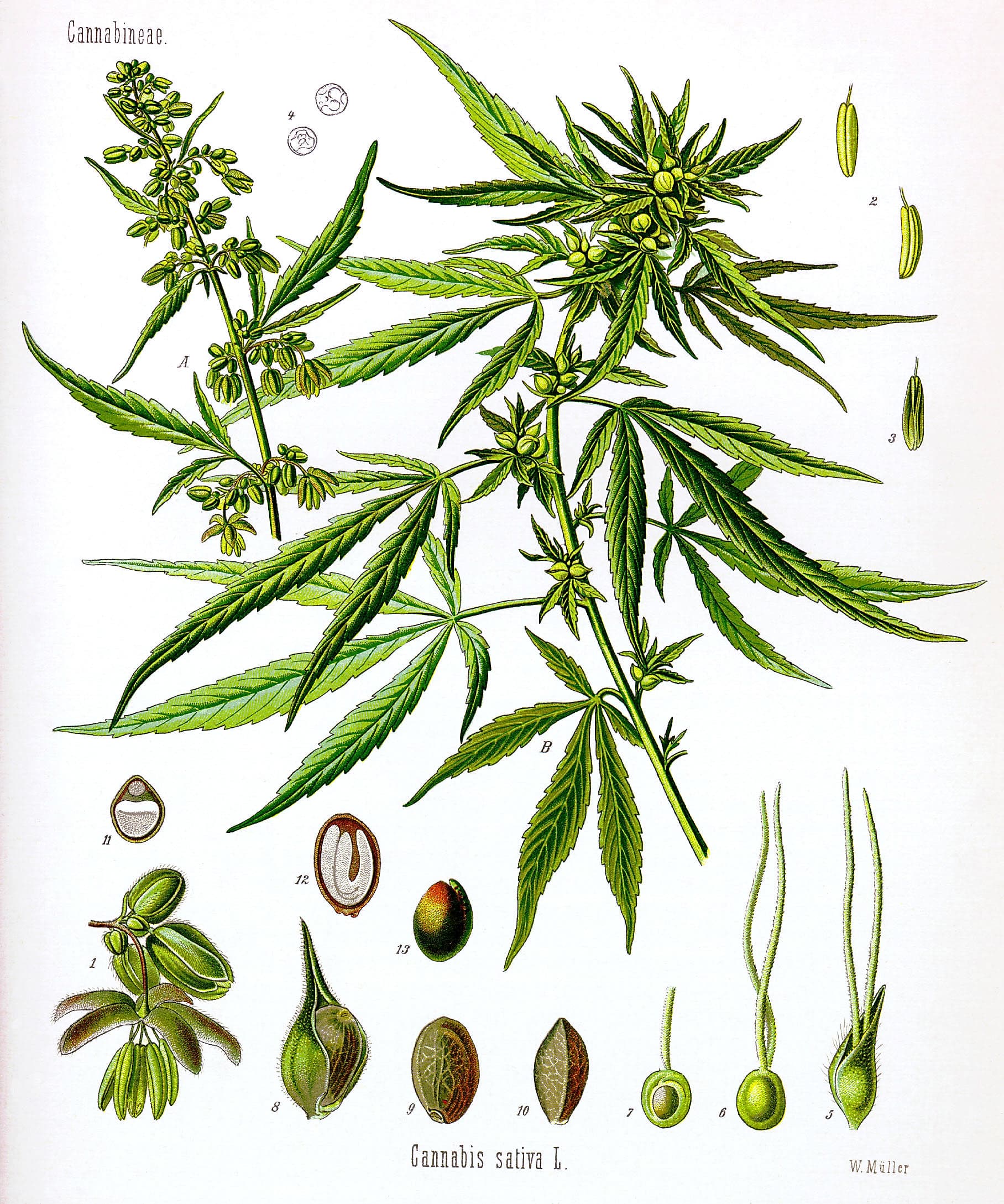
Chinese tradition placed hemp in the first volume of 120 'superior drugs harmless to humans,' alongside ginseng, jujube and cinnamon. The mythical Divine Farmer Shennong is said to have catalogued its medicine. From the beginning hemp carried a double identity — fiber for the body, medicine for the body — that Western law would later spend a century failing to disentangle.
Shennong Bencaojing · c. 100 CE
A page made of stalks
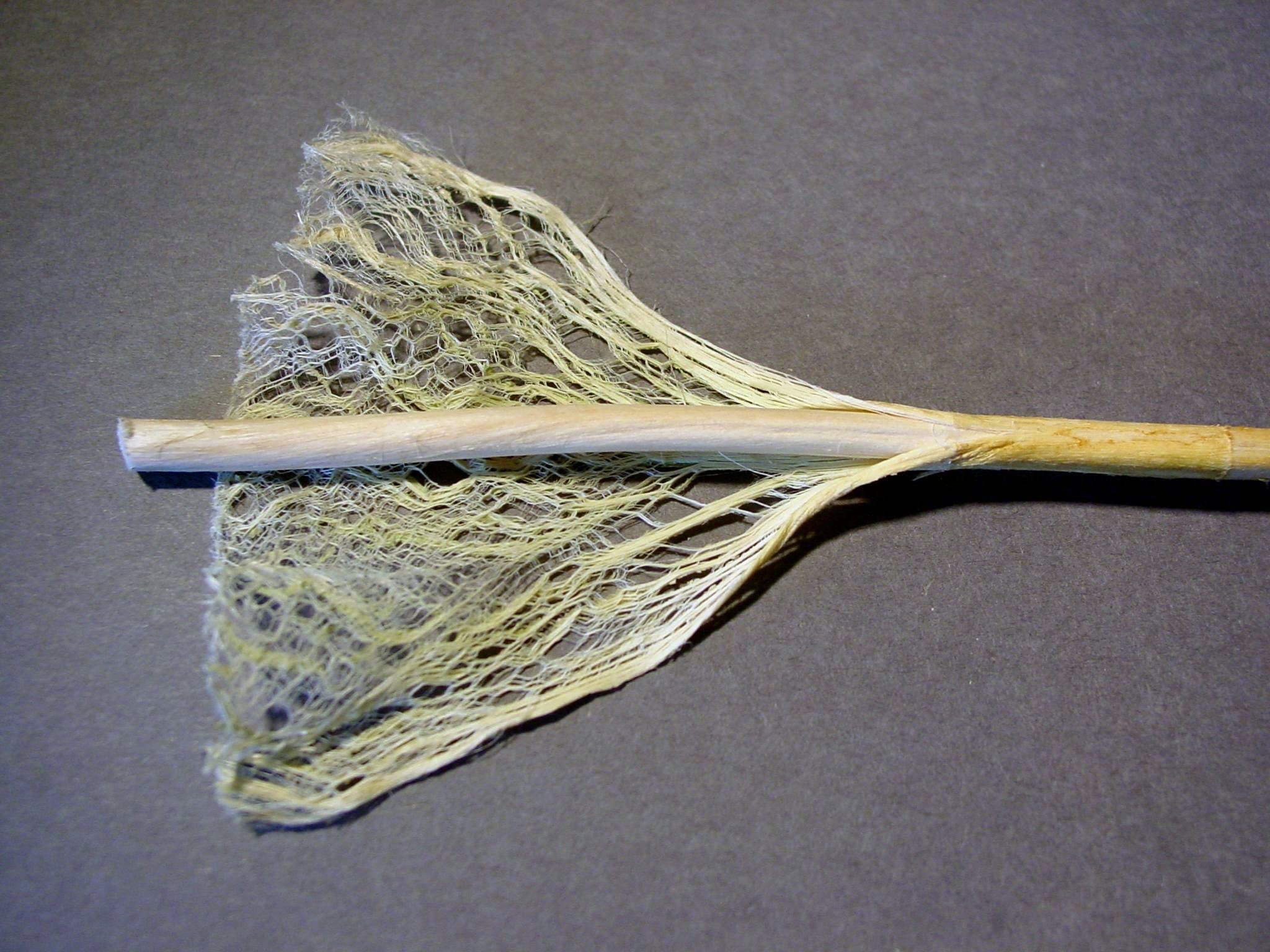
Hemp paper fragments at Fangmatan predate Cai Lun's official 105 CE 'invention' by centuries. Cai's contribution was a formal recipe — bark, hemp waste, old rags, fishnets, water, screen — and the institutional weight of the imperial court to spread it. For a thousand years, the dominant fiber in Chinese paper was hemp. The world's first information revolution moved on hemp pulp.
Cai Lun's recipe · 105 CE
Bhang and a Scythian tent
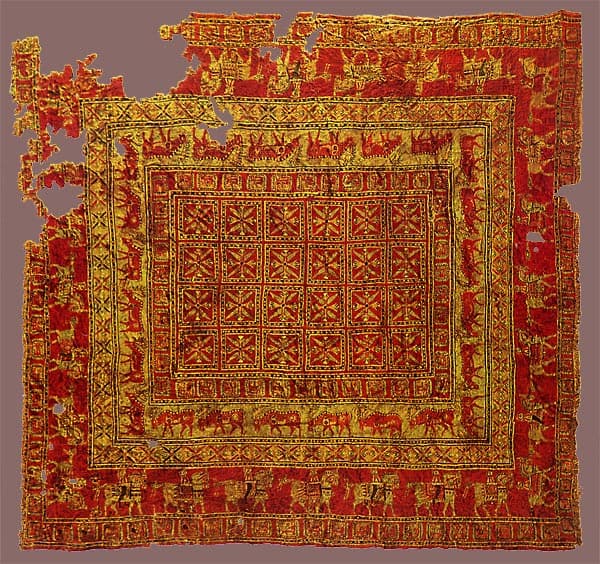
Herodotus wrote in the 5th century BCE of Scythians throwing hemp seeds onto red-hot stones inside felt tents and 'howling with joy at the vapor.' In 1929 archaeologists opened Pazyryk kurgan 2 in the Altai and found exactly that: a wooden tent frame, copper censers with carbonized hemp seed, a pouch of cannabis and coriander. The text and the object met across two and a half thousand years.
Herodotus · Pazyryk kurgan · 800 BCE
Gutenberg
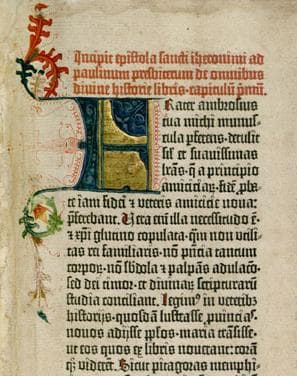
The Gutenberg Bible was not printed on hemp paper — the British Library identifies the substrate as recycled linen rag from Piedmont. But hemp and linen rag paper were essentially interchangeable in 15th-century European mills. By some estimates, three-quarters of the world's paper through the late 19th century was made from hemp. So Gutenberg's specific Bible was linen — but the medium that carried his revolution was the rag-paper economy hemp helped build.
Linen rag — not hemp · c. 1455
Hemp in the rigging
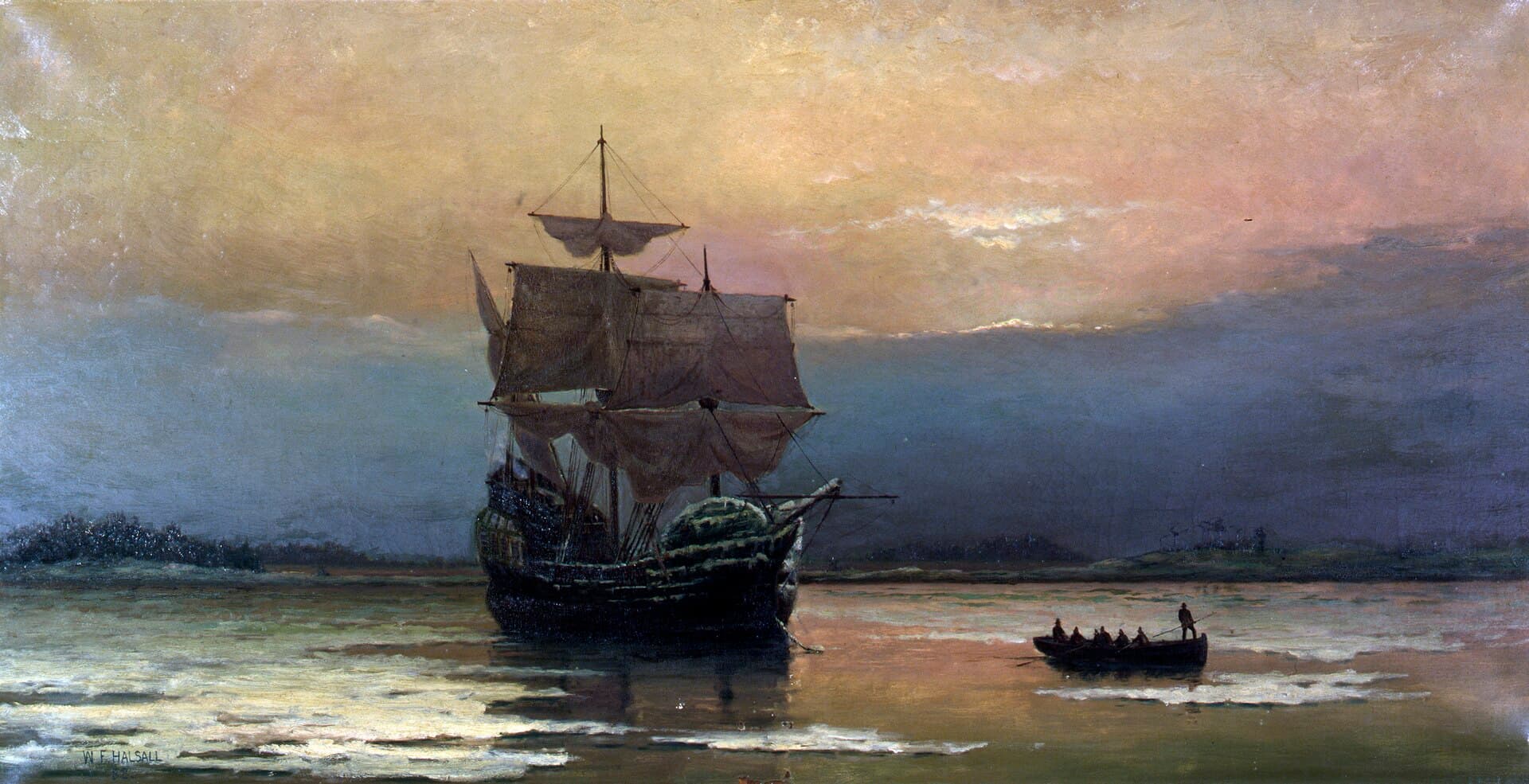
When the Mayflower sailed in September 1620, her sails were flax canvas and her cordage was hemp. The same was true of nearly every English merchant ship of the period. Puritans brought hemp seed in their belongings to plant in New England; by the mid-1600s hemp was essential to colonial economies from Massachusetts to Virginia, for rope, sailcloth, sacks and paper.
The Mayflower · 1620
Washington's field
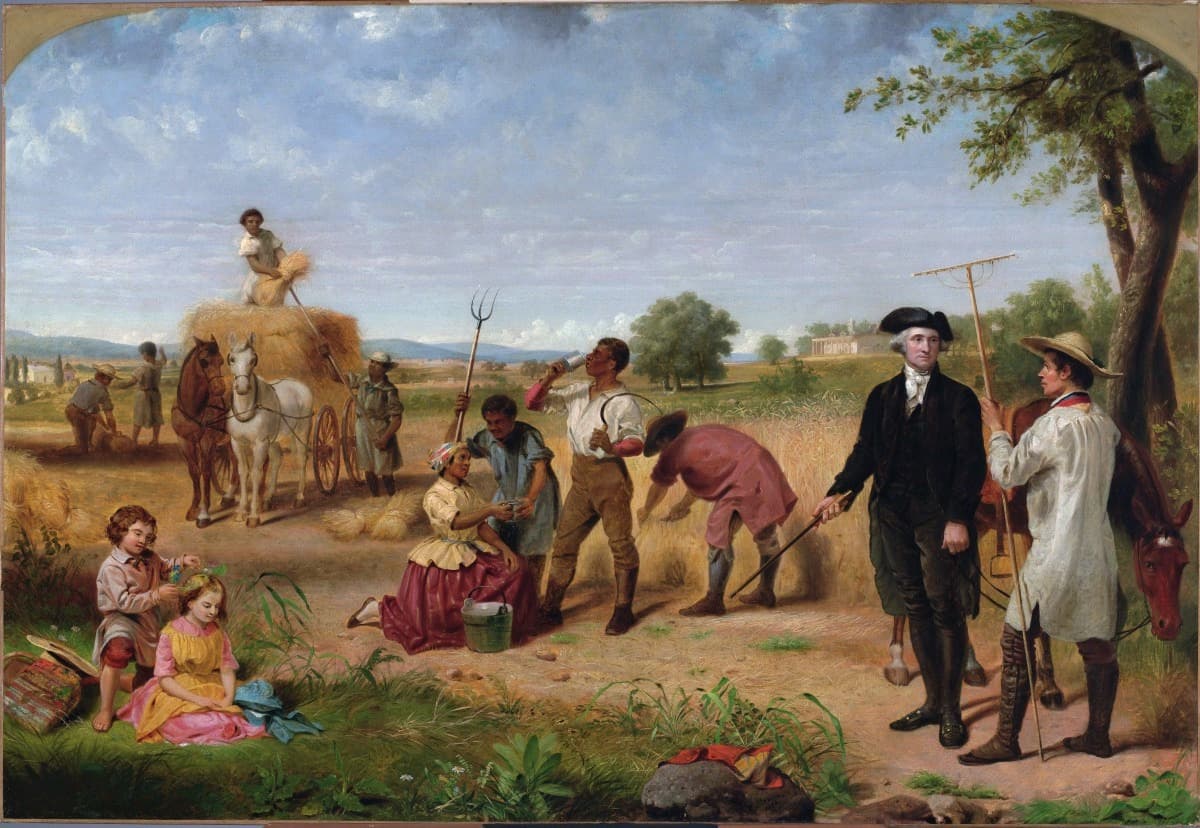
George Washington grew hemp at all five Mount Vernon farms for rope, sailcloth and to mend his Potomac fishing seines. Thomas Jefferson noted in his Farm Book that 'a hand can tend 3 acres of hemp a year, and tolerable ground yields 500 lbs to the acre.' The Declaration was not written on hemp — it is on parchment — but the working economy of the early Republic was steeped in the crop.
Mount Vernon · Monticello · 1700s
Cotton, steam, steel
Three technologies arrived almost simultaneously and undid hemp's dominance. Eli Whitney's cotton gin collapsed cotton processing costs. Steam engines made wind-and-canvas obsolete. Wire rope replaced hemp rigging on steel masts. By 1900, hemp had not been outlawed anywhere — it had simply been outcompeted, field by field, by younger and cheaper substitutes.
The quiet decline · late 1800s
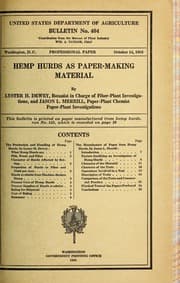
Bulletin 404
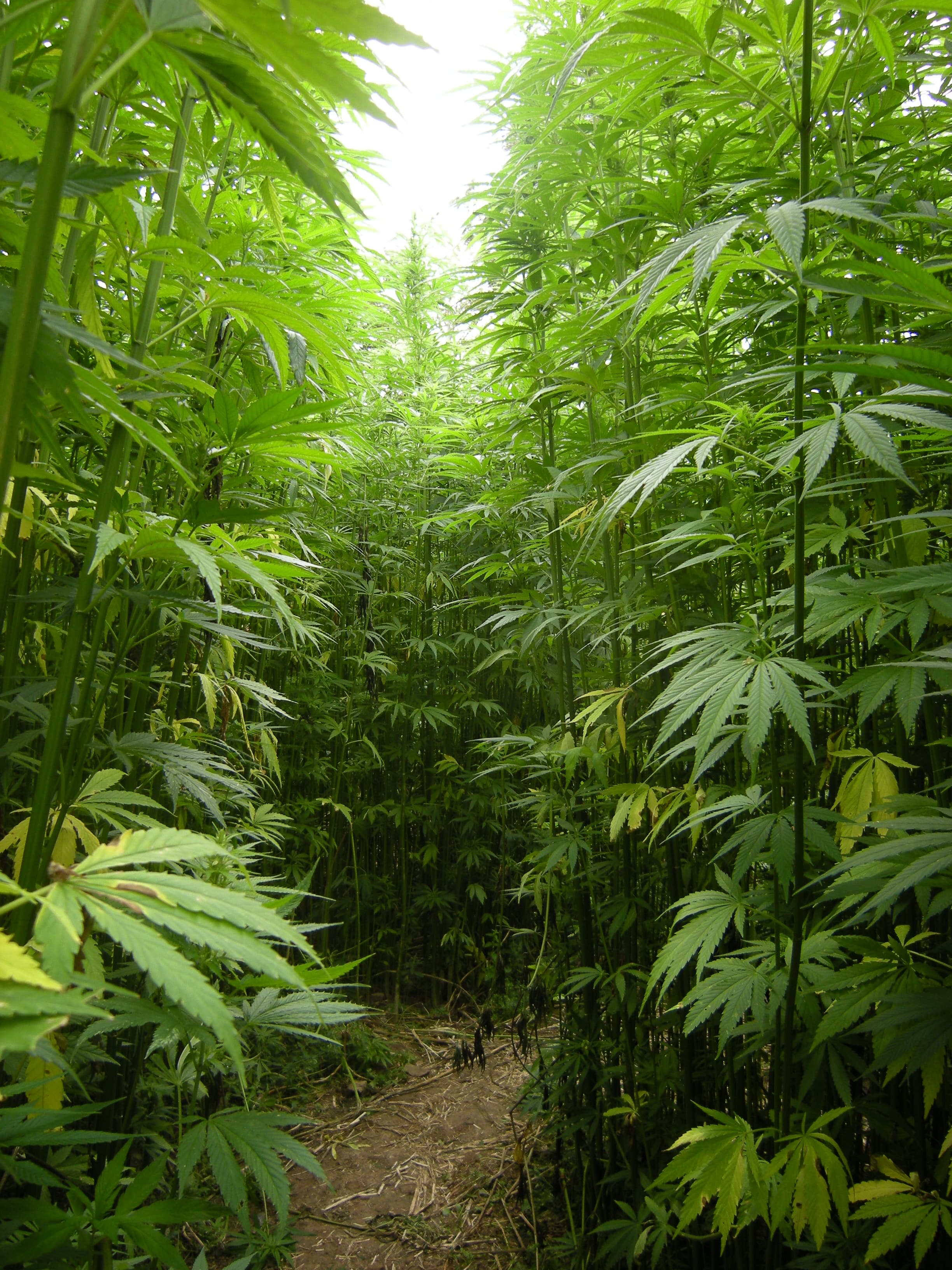
Lyster Dewey and Jason Merrill ran trials and reported that hemp hurd paper 'would be classed as a No. 1 machine-finish printing paper.' Their bulletin pointed at a plant capable of relieving pressure on American woodlands within a single generation. It did not happen. The findings were quietly shelved and forgotten until the 1970s.
Dewey & Merrill, USDA · 1916
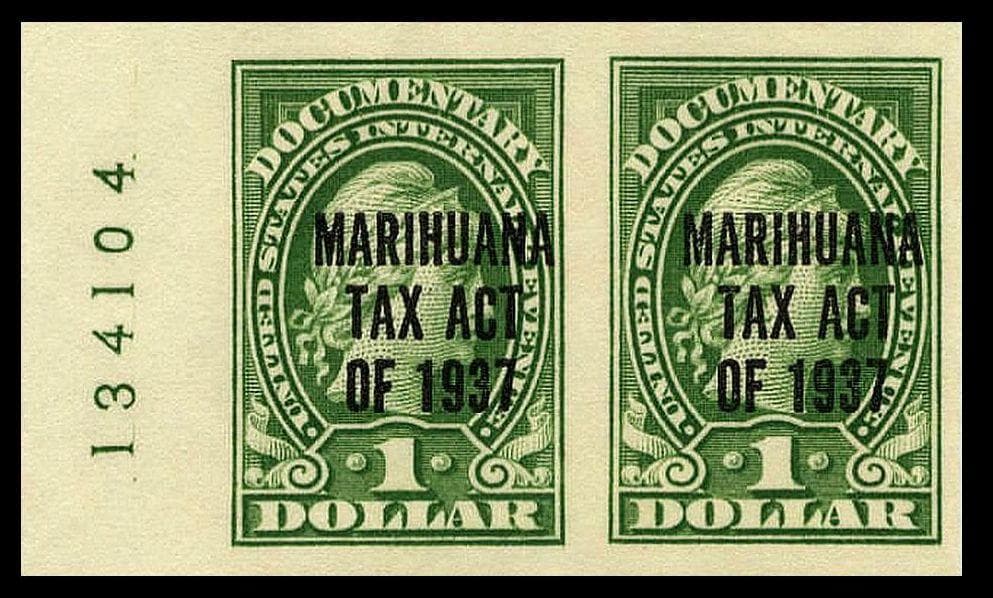
The Marihuana Tax Act
On 14 April 1937, the Marihuana Tax Act imposed a transfer tax and apparatus of stamps so onerous that legitimate hemp processors could not function. The word 'marihuana' did the work the law could not openly do — it conflated a fiber crop with a recreational drug. American industrial hemp was extinguished without ever being banned outright.
Harry Anslinger · DuPont · Hearst · 1937
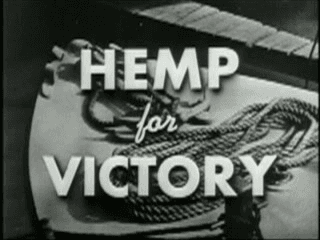
Hemp for Victory
Five years after the Tax Act, with the Philippines under Japanese occupation, the same USDA produced a 14-minute film begging farmers to plant hemp for the war effort. In 1942 they planted 36,000 acres; the 1943 target was 300,000. After the war the film disappeared. The government denied it had ever existed. In 1989 two VHS copies surfaced at the Library of Congress.
USDA war film · 1942
Two cooperatives
On 15 February 1973, fewer than 100 farmers founded La Chanvrière de l'Aube in Champagne to keep growing hemp after the local Bolloré mill closed. Twenty years later Ben Dronkers started HempFlax in the Netherlands. Nobody in Europe remembered how to harvest the crop. They had to learn it again — and they did.
La Chanvrière 1973 · HempFlax 1993
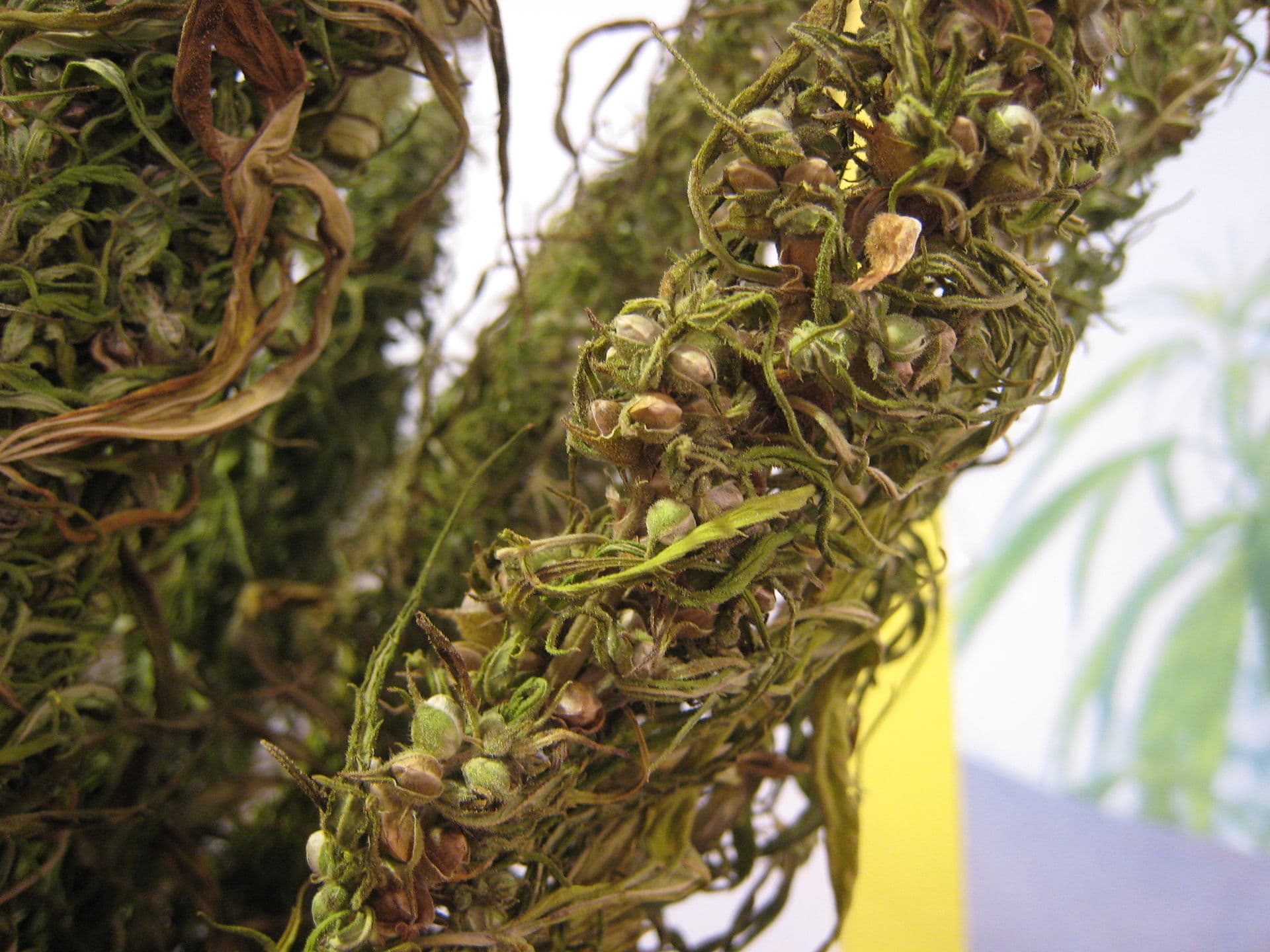
The doors reopen
On 20 December 2018, the U.S. Farm Bill carved hemp out of the Controlled Substances Act at a 0.3% THC ceiling. On 1 January 2023 the European Union aligned. In 2021 Kingspan — one of Europe's largest insulation manufacturers — took a majority stake in HempFlax Building Solutions and launched HemKor. Ukraine, a major Soviet-era hemp producer, has kept the Glukhiv Institute of Bast Crops running through the war and is folding hemp into post-war reconstruction planning. A material that started as a Neolithic cord re-entered the construction supply chain.
Farm Bill 2018 · EU CAP 2023
The Renovation Wave
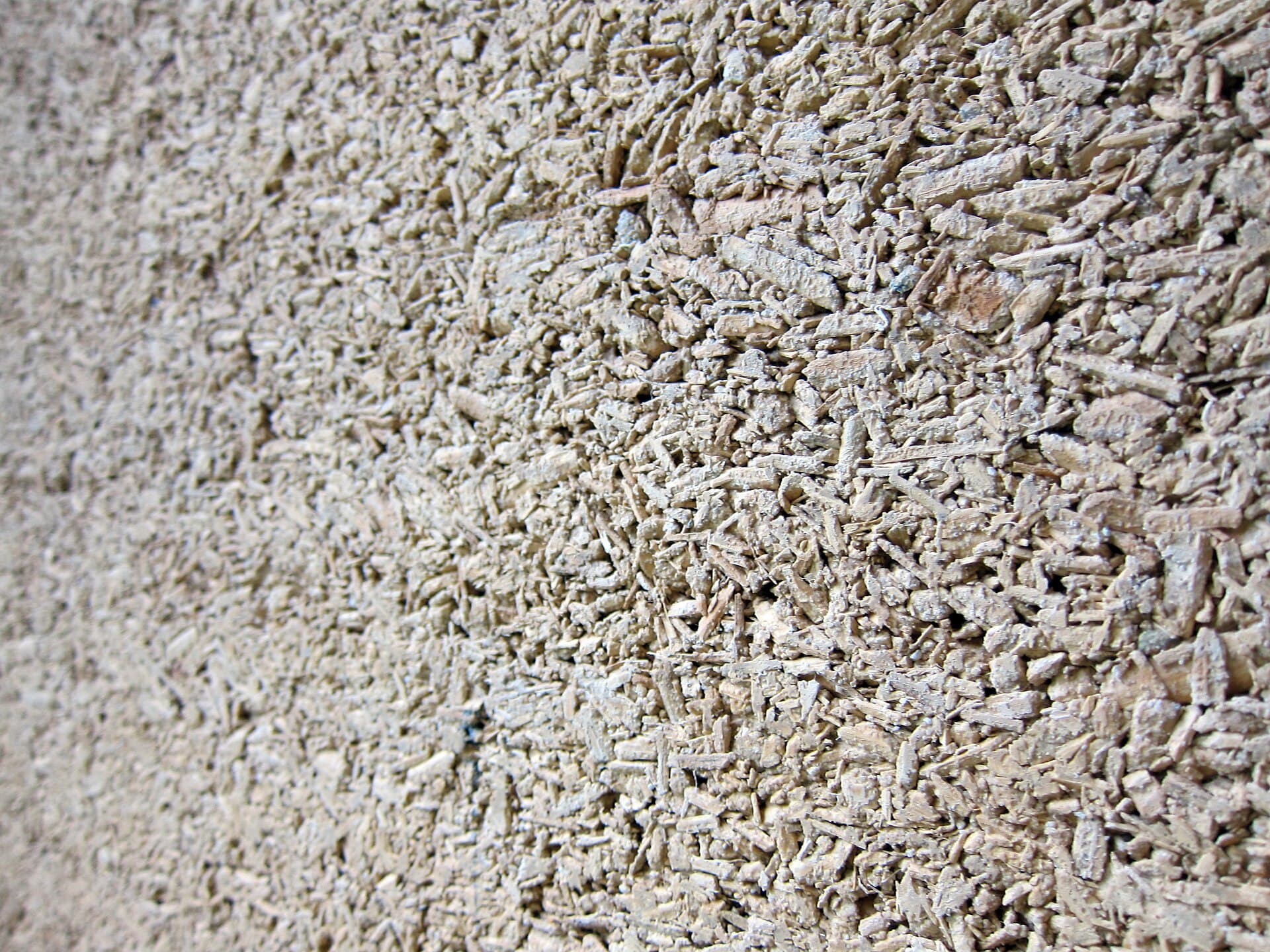
The revised Energy Performance of Buildings Directive enters force across the EU on 29 May 2026. The Renovation Wave aims to double the annual rate of building renovation by 2030. The directive doesn't name hemp. But it does name the category — biobased insulation — into which hemp fits naturally. For the first time since 1937, the legal infrastructure and the market are pulling in the same direction.
EPBD transposition · 29 May 2026
How can we hemp you?
Building. Sourcing. Specifying. Investing. Or just curious about where the European hemp supply chain is going in 2026. Tell us who you are and what you're working on. We read everything; we reply to most within two working days.
We do not sell, share, or rent your data. Your message lands in our team inbox and stays there.